MNFKBB
Electrical Panels
Description
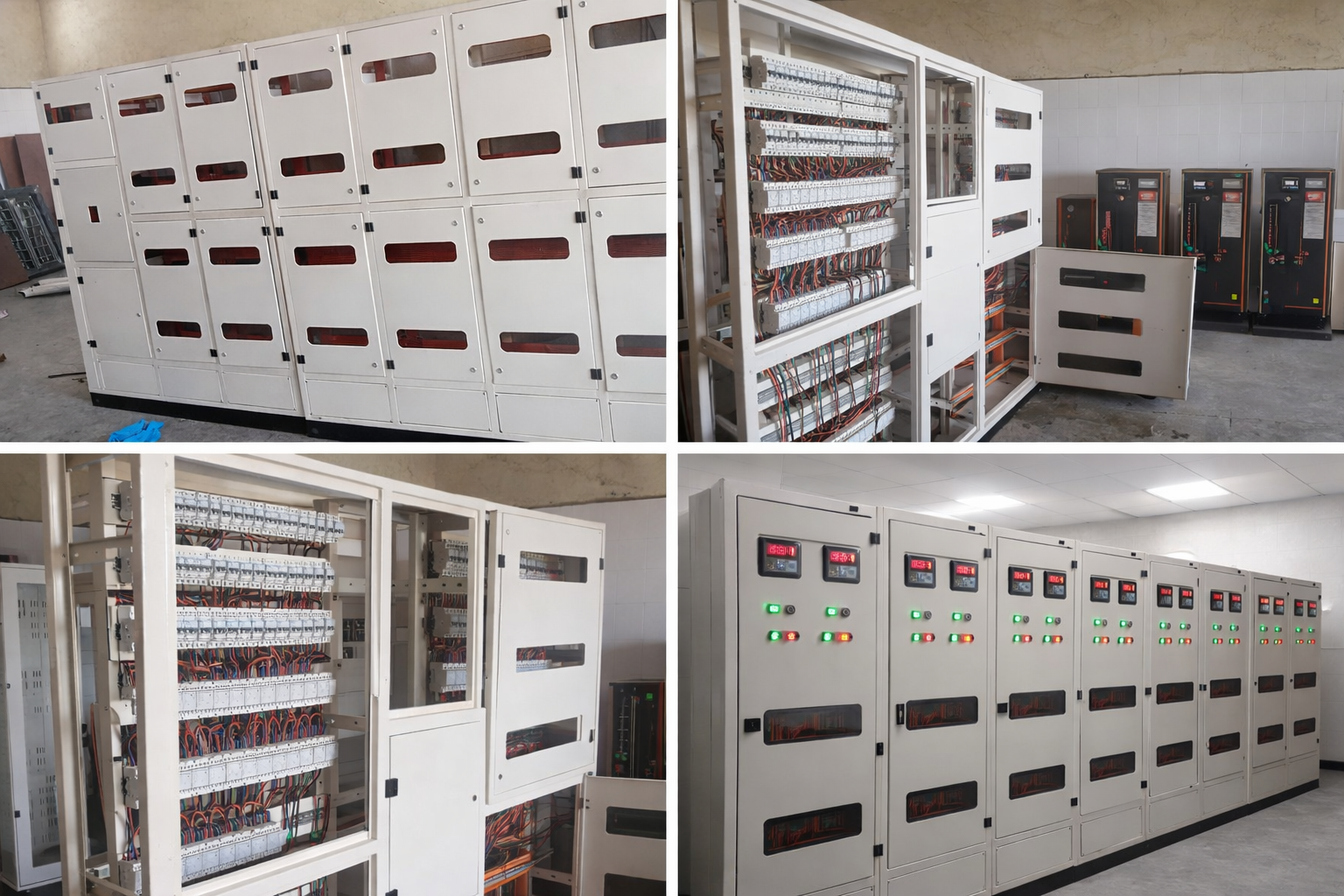
Our Low Voltage Electrical Panels are engineered for safe, reliable, and efficient power distribution in industrial, commercial, and infrastructure applications. Designed with standardized modular construction, these panels ensure seamless expansion, easy modification, and long-term operational reliability.
Built to meet modern demands for high performance, automation readiness, and future scalability, the panels integrate advanced protection, monitoring, and control features while reducing maintenance complexity. Their unified structure improves cabinet interconnection, simplifies installation, and enhances operator safety.
Low voltage electrical panels are widely used as Power Centers (PCs) for power generation, transmission, and distribution, and as Motor Control Centers (MCCs) for electrical energy conversion and consumption in power plants, substations, factories, commercial buildings, hotels, airports, ports, and communication centers.
Technical Specifications
Applicable Standards:
GB7251.1-2005 (TTA)
JB/T9661-1999
Rated Voltage (Ue):
380 / 660 V
Rated Insulation Voltage (Ui):
660 V (up to 1000 V)
Rated Frequency:
50 / 60 Hz
Overvoltage Category:
IV, III
Pollution Degree:
3
Busbar System
Horizontal Busbar:
Rated Current: 630 A, 2000 A, 2500 A, 3150 A, 4000 A, 5000 A, up to 6300 A
Short-Time Withstand Current (Icw): 50, 65, 80, 100 kA (1 s)
Peak Withstand Current (Ipk): 105, 140, 176, 220 kA (max 0.1 s)
Vertical Busbar:
Maximum Operating Current: ≤1000 A
Short-Time Withstand Current: 50 kA
Peak Withstand Current: 105 kA
Enclosure & Protection
Protection Degree:
IP30 standard
IP40 available (special requirements)
Installation Type:
Indoor installation
Environmental Conditions
Ambient Temperature:
-5 °C to +40 °C (24-hour average ≤ +35 °C)
Relative Humidity:
≤50% at +40 °C
Up to 90% at +20 °C (condensation may occur)
Altitude:
≤2000 m
Environment:
No severe vibration, shock, or corrosive atmosphere
Design & Functional Features
Standardized modular cabinet structure
Unified dimensions and internal layout
Simplified operation and maintenance
Future-ready design to avoid frequent upgrades
Optional reactive power compensation (SVG/capacitor banks)
Emergency power interface and load monitoring options
Communication interface support for automation systems